Trezor vs Ledger vs SafePal: Complete Hardware Wallet Comparison
The trezor vs ledger hardware wallet debate dominates hardware wallet discussions, but the ledger vs trezor vs safepal comparison provides fuller market context. This comprehensive guide examines the trezor vs ledger nano s question specifically while comparing all major manufacturers. For more information about Ledger wallets and their features, see our complete guide to Ledger apps and wallets.
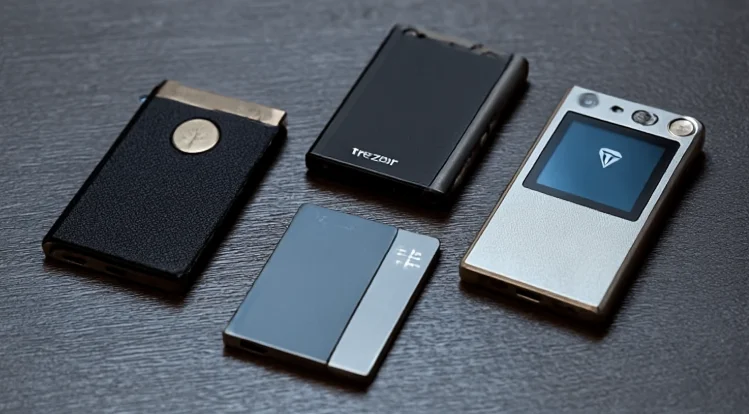
Hardware Wallet Market Overview
Why This Comparison Matters
Choosing between hardware wallets affects cryptocurrency security for years to come. Unlike software that can be easily switched, hardware wallet choice involves financial investment and learning curve. Making the right initial decision prevents future regret and unnecessary repurchasing.
The trezor vs ledger hardware wallet comparison represents the primary decision for most buyers—these companies together dominate market share. Adding SafePal to the ledger vs trezor vs safepal analysis provides budget and alternative perspectives that suit certain users.
Key Factors in Choosing a Hardware Wallet
When evaluating hardware wallets, prioritize security architecture including secure element presence and certifications, cryptocurrency support breadth covering coins and tokens needed, user experience including software quality and mobile compatibility, price-to-value ratio relative to your portfolio size, company track record including history and security incident handling, and firmware philosophy balancing open-source transparency versus closed-source security. Learn more about Ledger wallet features and check our Ledger software updates for the latest improvements.
Trezor vs Ledger Hardware Wallet: Security Comparison
Security represents the most important differentiator in the trezor vs ledger hardware wallet comparison.
Secure Element Architecture
Ledger has always used certified secure element chips—specialized processors designed specifically to protect cryptographic secrets. Current Ledger devices use ST33 series chips with CC EAL5+ or EAL6+ certification. For detailed information about each model, see our Ledger apps and wallets guide.
Trezor's historical approach relied on general-purpose STM32 microcontrollers without dedicated security chips. The company argued open-source transparency provided sufficient security through community auditing.
This changed with Trezor Safe 3 (2023), which includes a CC EAL6+ certified secure element—matching Ledger's newer devices. This convergence suggests industry consensus that secure elements provide meaningful security benefits.
Current secure element status for the trezor vs ledger hardware wallet comparison shows Ledger Nano S Plus with CC EAL6+, Ledger Nano X with CC EAL5+, Trezor Safe 3 with CC EAL6+, Trezor Safe 5 with CC EAL6+, Trezor Model T with none, Trezor Model One with none, and SafePal S1 Pro with EAL5+.
Open Source vs Closed Source Firmware
Firmware philosophy differs significantly between manufacturers.
Trezor releases fully open-source firmware and hardware schematics. Every line of code is publicly auditable, allowing independent security researchers to verify implementation correctness. This transparency enables community verification but also exposes implementation details to potential attackers.
Ledger uses closed-source secure element firmware with open-source application layer. Core cryptographic operations remain proprietary, requiring trust in Ledger's implementation. The company argues secure element architecture provides security guarantees regardless of implementation visibility. Stay updated with Ledger firmware updates and security patches.
SafePal uses open-source firmware with its air-gapped S1 series, positioning between Ledger and Trezor approaches.
Security Certifications
Third-party validation provides independent verification of manufacturer claims.
Ledger devices carry CC EAL5+/EAL6+ certification plus ANSSI certification from France's National Cybersecurity Agency. Dual certification from commercial labs and government security experts provides robust assurance.
Trezor Safe 3 and Safe 5 have obtained CC EAL6+ certification for their secure elements. Older Trezor Model T and Model One have no certifications—general-purpose processors don't undergo secure element testing.
SafePal S1 Pro claims EAL5+ certification for its secure element but lacks government agency certification.
Trezor vs Ledger Nano S: Entry-Level Comparison
The trezor vs ledger nano s comparison focuses on the most popular price segment.
Ledger Nano S Plus vs Trezor Safe 3
These $79 devices represent current entry-level options with secure elements.
Ledger Nano S Plus ($79) offers CC EAL6+ secure element, 128x64 OLED display, USB-C connectivity, 100+ app capacity, closed-source firmware (open-source apps), Ledger Live ecosystem, and 2-year warranty. For setup help, visit our Ledger support page.
Trezor Safe 3 ($79) offers CC EAL6+ secure element, 128x64 OLED display, USB-C connectivity, unlimited coin capacity (no apps needed), fully open-source firmware, Trezor Suite ecosystem, haptic feedback, and 2-year warranty.
These devices are remarkably similar in specifications and security certification. The trezor vs ledger nano s decision at this tier comes down to software preference (Ledger Live vs Trezor Suite) and open-source philosophy.
Ledger Nano S Plus vs Trezor Model One
For the most budget-conscious buyers comparing trezor vs ledger nano s options:
Trezor Model One ($59) has no secure element (general-purpose chip only), smaller 128x64 display, Micro-USB connector, fully open-source firmware, and 2-year warranty.
The $20 savings versus Nano S Plus sacrifices secure element protection. For most users, the additional $20 for certified secure element represents worthwhile investment in the trezor vs ledger hardware wallet decision.
Ledger vs Trezor vs SafePal: Full Comparison
SafePal's Position in the Market
SafePal entered the market in 2018 backed by Binance, offering aggressive pricing and unique features. The company's S1 Pro uses air-gapped QR code communication rather than USB or Bluetooth connections.
SafePal advantages include lower pricing than competitors ($69 for S1 Pro), air-gapped operation eliminating physical connection vectors, large touchscreen interface, Binance ecosystem integration, and 10,000+ claimed supported assets.
SafePal considerations include shorter company track record (founded 2018 vs 2014 for Ledger/Trezor), EAL5+ certification (lower than competitors' EAL6+), less established security research community, and limited brand recognition outside Asia.
Air-Gapped vs Connected Devices
The ledger vs trezor vs safepal comparison includes different connectivity philosophies.
Ledger and Trezor devices connect physically via USB (and Bluetooth for Ledger Nano X). This enables convenient operation but creates physical connection between wallet and potentially compromised computers.
SafePal's S1 series operates air-gapped—communication occurs exclusively through QR codes. The device never physically connects to any other device. This approach appeals to security purists but requires scanning QR codes for every transaction, adding friction to daily use.
Complete Comparison Table
| Feature | Ledger Nano S Plus | Ledger Nano X | Trezor Safe 3 | Trezor Model T | SafePal S1 Pro |
|---|---|---|---|---|---|
| Price | $79 | $149 | $79 | $179 | $69 |
| Secure Element | CC EAL6+ | CC EAL5+ | CC EAL6+ | None | EAL5+ |
| Connection | USB-C | USB-C + Bluetooth | USB-C | USB-C | Air-gapped QR |
| Touchscreen | No | No | No | Yes | Yes |
| iOS Support | No | Yes | No | No | No |
| Android Support | USB OTG | USB + Bluetooth | USB | USB | Via app |
| Battery | No | Yes (8+ hours) | No | No | Yes |
| Open Source | Partial | Partial | Full | Full | Full |
| Display | 128x64 OLED | 128x64 OLED | 128x64 OLED | 240x240 LCD | 320x320 LCD |
| Coins Supported | 5,500+ | 5,500+ | 8,000+ | 8,000+ | 10,000+ |
| App Capacity | 100+ | 100+ | Unlimited | Unlimited | Unlimited |
| Shamir Backup | No | No | Yes | Yes | No |
| Company Founded | 2014 | 2014 | 2013 | 2013 | 2018 |
| Warranty | 2 years | 2 years | 2 years | 2 years | 1 year |
Supported Cryptocurrencies
All three manufacturers provide extensive cryptocurrency support.
Ledger claims 5,500+ supported coins and tokens through 500+ applications with native Ledger Live integration for approximately 50 major assets. Learn about Ledger apps and how to manage them.
Trezor claims 8,000+ assets with strong EVM chain support through Trezor Suite with no app installation required.
SafePal advertises 10,000+ assets with aggressive multi-chain support and Binance DEX integration.
Practical differences are minimal for most users. All support major cryptocurrencies (Bitcoin, Ethereum, top 100 by market cap), stablecoins (USDT, USDC, DAI), and NFTs on supported networks. Verify specific obscure tokens before purchasing.
User Experience and Mobile Support
Software ecosystem quality affects daily usage.
Ledger Live provides intuitive portfolio management with buying, selling, swapping, and staking integration. Available on desktop (Windows, macOS, Linux) and mobile (iOS, Android). Ledger Nano X's Bluetooth enables full iOS support—the only hardware wallet with iPhone connectivity. Check our Ledger app updates for the latest features.
Trezor Suite offers advanced features including Tor integration, coin control, and detailed transaction analysis. Desktop and web versions available; mobile support limited to Android via USB.
SafePal App integrates with Binance ecosystem, DEX functionality, and portfolio tracking. Air-gapped communication requires scanning QR codes for transactions—more secure but less convenient.
Mobile compatibility summary for the ledger vs trezor vs safepal decision shows Ledger Nano X supporting iOS (Bluetooth) and Android (USB/Bluetooth), Ledger Nano S Plus supporting Android only (USB OTG), Trezor devices supporting Android only (USB), and SafePal supporting both via app with QR codes.
Pricing Analysis
| Device | Price | Best Value For |
|---|---|---|
| SafePal S1 Pro | $69 | Budget buyers, air-gapped preference |
| Ledger Nano S Plus | $79 | Best security per dollar, desktop users |
| Trezor Safe 3 | $79 | Open-source preference, Shamir backup |
| Trezor Model One | $59 | Extreme budget (no secure element) |
| Ledger Nano X | $149 | Mobile users, iPhone owners |
| Trezor Model T | $179 | Touchscreen, fully open-source |
The trezor vs ledger nano s price comparison shows identical $79 pricing for current entry-level devices with secure elements (Nano S Plus vs Safe 3). Value analysis favors both equally—choice depends on ecosystem preference rather than pricing. For detailed device information, see our complete Ledger wallets guide.
Which Hardware Wallet Should You Choose?
Choose Ledger If...
You own an iPhone requiring iOS-compatible hardware wallet (only Ledger with Bluetooth works). You prefer wireless convenience through Bluetooth connectivity for mobile transactions. You want proven 10+ year track record from market leader. You prefer Ledger Live's interface and integrated services. You value higher secure element certification (Nano S Plus's EAL6+ versus some competitors). For setup assistance, contact Ledger customer service.
Choose Trezor If...
You prioritize fully open-source transparency with auditable firmware. You want Shamir Backup for split recovery phrase storage. You prefer Trezor Suite's advanced features like Tor integration. You value on-device passphrase entry avoiding computer exposure. You're philosophically committed to open-source security model.
Choose SafePal If...
You want the lowest price entry point at $69. You prefer air-gapped operation eliminating physical connections. You're invested in Binance ecosystem. You want touchscreen at budget pricing. You're comfortable with shorter company track record.